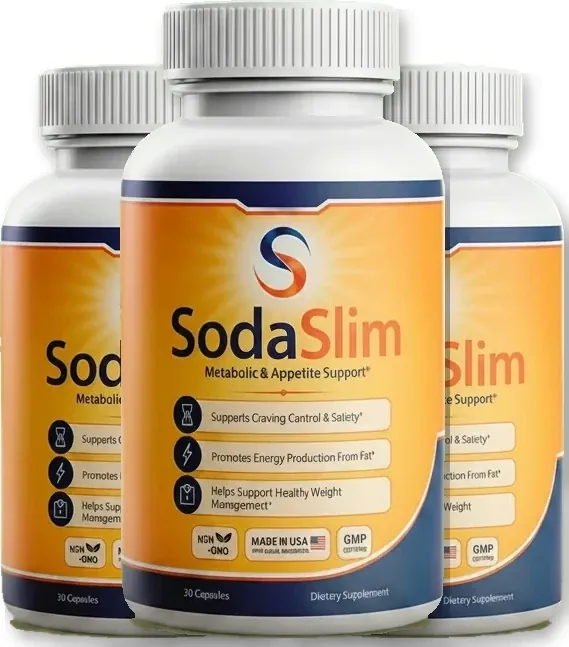
Ingredient profile
Raspberry Ketone in Sodaslim: 130 mg of an Untested Ingredient
Each Sodaslim capsule has 130 mg of raspberry ketone, the aroma compound of raspberries. No human study has tested raspberry ketone on its own (IFT: Raspberry ketone not substantiated). The only human weight study mixed it with caffeine and four other ingredients. The NIH says its effect on weight is unknown and it has not been studied enough to tell if it is safe (NIH ODS: Weight-loss supplements (consumer)).
Written by the Sodaslim editorial teamUpdated
The basics
What is raspberry ketone?
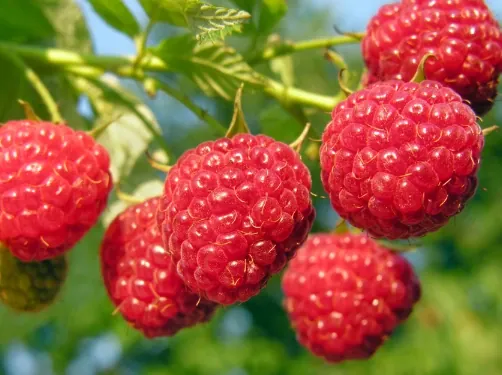
Raspberry ketone is the compound that gives red raspberries their smell. Food makers use it as a flavoring in tiny amounts.
Its chemical name is 4-(4-hydroxyphenyl)butan-2-one. It is not a ketone body like the ones made on a keto diet, even though the names sound alike. It is a scent molecule.
Sodaslim lists "Raspberry Ketone" second on its label, at 130 mg per capsule. The label gives no source, so it does not say whether the compound came from fruit or was made in a lab. It is one of two Sodaslim ingredients with no caffeine, along with garcinia extract.
| Label name | Raspberry Ketone |
|---|---|
| What it is | 4-(4-hydroxyphenyl)butan-2-one · Aroma compound |
| Position on the label | Printed with its own amount |
| Amount per serving (1 capsule) | 130 mg, printed |
| Amount used in research | No human study of raspberry ketone alone |
| Strength of evidence | Insufficient; safety unknown |
| Why it is used | The compound that gives raspberries their smell |
| Main caution | Not studied enough in people to know if it is safe at supplement doses. |
Dose check
How much raspberry ketone is in a Sodaslim capsule?
Sodaslim has 130 mg of raspberry ketone per capsule, and the amount is printed, not hidden in a blend. That is well below the roughly 1,000 mg a day found in many raspberry ketone products (IFT: Raspberry ketone not substantiated).
| Reference point | Raspberry ketone per day | What it tells you |
|---|---|---|
| Sodaslim, 1 capsule | 130 mg | Printed on the label; one capsule a day |
| Typical single-ingredient products | About 1,000 mg | Far above what people get from food |
| Rodent studies, scaled to a 150-lb adult | About 870 to 3,700 mg | Animal doses, not human evidence |
| Human trial of raspberry ketone alone | None exists | No dose has been tested in people |
| Flavoring use in food | Very small | Its food safety status assumed tiny intakes |
A lower amount means lower exposure. It does not mean a proven dose, because no dose has been proven in people. The Sodaslim Supplement Facts page shows all five amounts side by side.
At a glance
Raspberry ketone in Sodaslim in five numbers
Evidence
Does raspberry ketone help with weight loss in people?
Nobody knows, because it has never been tested alone in people. The NIH Office of Dietary Supplements rates the evidence as insufficient and says raspberry ketone has only been studied in combination products (NIH ODS: Weight-loss supplements (HP)).
The one human weight study, published in 2013, lasted 8 weeks. Its capsule mixed raspberry ketone with caffeine, capsaicin, synephrine, garlic and ginger (IFT: Raspberry ketone not substantiated). Any change in that study could have come from the caffeine or the other parts. There is no way to pull out the share that raspberry ketone added.
The NIH consumer fact sheet puts it plainly: the effect of raspberry ketone on weight is unknown (NIH ODS: Weight-loss supplements (consumer)). The Natural Medicines database also rates the evidence "insufficient" (IFT: Raspberry ketone not substantiated).
Sodaslim also pairs raspberry ketone with caffeine. Even if you notice a change, you cannot credit it to raspberry ketone. Caffeine is the ingredient with a measured effect, covered on the caffeine ingredient page.
Animal studies
Why don't mouse studies prove raspberry ketone works?
Because the doses were huge and the animals were not people. Rodent studies used 0.545 to 2.18 grams per kilogram of body weight. Scaled to a 150-lb adult, that is about 870 to 3,700 mg a day (IFT: Raspberry ketone not substantiated).
Sodaslim's 130 mg is a small slice of that range. Results in mice at such doses do not tell us what 130 mg does in a person. They also do not show how much a human body absorbs.
The FTC says health claims need competent and reliable scientific evidence, and that animal and lab studies generally fall short (FTC: Health products compliance). That is why we do not describe any raspberry ketone benefit as fact.
Our blog post on what raspberry ketone research shows walks through the studies in more depth.
Safety
Is raspberry ketone safe to take every day?
Its safety at supplement doses is unknown. The NIH says raspberry ketone "hasn't been studied enough to tell if it's safe" (NIH ODS: Weight-loss supplements (consumer)).
The food industry treats it as a safe flavoring. That status assumed very small intakes, the amounts that flavor a food (IFT: Raspberry ketone not substantiated). A daily capsule is a different exposure, and no study has checked absorption or toxicity of raspberry ketone alone in people.
- No published human safety study of raspberry ketone alone
- No known safe upper limit for daily use
- Sodaslim's 130 mg is about one eighth of a typical single-ingredient product
- The label's caution covers the whole capsule: not for under-18s, pregnant or nursing women
Because the data are missing, people who take medicine or have a medical condition should show the label to a doctor first. The Sodaslim side effects page covers the whole formula, including its caffeine.
In the formula
Why is raspberry ketone in Sodaslim at all?
The brand does not say. The label lists it without a claim tied to it. Raspberry ketone has been sold for weight loss on the strength of rodent studies, not human trials (IFT: Raspberry ketone not substantiated).
It does add to the capsule's total. Raspberry ketone is 130 of the 658 mg in each capsule, about one fifth by weight. That share goes to the one ingredient with no human data of its own.
What it does not add
It adds no caffeine. All of Sodaslim's caffeine comes from caffeine anhydrous, plus small amounts in green tea and green coffee extracts. So raspberry ketone does not change the caffeine math, which is about 140 mg per capsule in total.
Our view
Is the raspberry ketone in Sodaslim worth paying for?
On current evidence, no one can say it does anything in people. It is the weakest-supported of Sodaslim's five ingredients.
In its favor
- Amount printed on the label: 130 mg
- Far below the 1,000 mg in many single products
- Adds no caffeine
Against it
- No human study of raspberry ketone alone
- Effect on weight unknown, per the NIH
- Safety at supplement doses not studied
- Source not stated on the label
FAQ
Raspberry ketone in Sodaslim: common questions
Is 130 mg of raspberry ketone a lot?
Not compared with other products. Each Sodaslim capsule has 130 mg, while many raspberry ketone products give about 1,000 mg a day (IFT: Raspberry ketone not substantiated). It is still far more than people get from food, where it is used in tiny amounts as a flavoring.
Can 130 mg of raspberry ketone help with weight loss?
There is no human evidence that it does. No study has tested raspberry ketone alone in people, and the only human weight study mixed it with caffeine, capsaicin, synephrine, garlic and ginger (IFT: Raspberry ketone not substantiated). The NIH says its effect on weight is unknown (NIH ODS: Weight-loss supplements (consumer)).
Is raspberry ketone safe?
Its safety in people at supplement doses is unknown. The NIH says it has not been studied enough to tell if it is safe (NIH ODS: Weight-loss supplements (consumer)). Its food status as a flavoring assumed very small intakes (IFT: Raspberry ketone not substantiated). Ask a doctor first if you take medicine or have a health condition.
Does raspberry ketone put you in ketosis?
No. Raspberry ketone is the aroma compound of raspberries. Ketosis happens when your body makes ketone bodies on a very low-carb diet. The shared word is chemistry naming, not a shared effect, and no study shows raspberry ketone causes ketosis.
Is the raspberry ketone in Sodaslim made from real raspberries?
The label does not say. It lists only "Raspberry Ketone 130 mg" with no source. Ask the brand at [email protected] if the source matters to you.
Does raspberry ketone contain caffeine?
No. Raspberry ketone has no caffeine. The caffeine in Sodaslim, about 140 mg per capsule, comes from 138 mg of caffeine anhydrous plus small amounts in the green tea and green coffee extracts. The exact total is not printed on the label.
Who wrote this
Written and reviewed by
Plain-language pages built from the bottle label, the order page and linked public health sources such as NIH, FDA and CDC.
Last updated . Read our editorial standards and how we check reviews. This website is run by a U.S. retail desk for Sodaslim, not by the manufacturer. We earn money when you buy through our order links.
Keep reading
More about Sodaslim
Raspberry ketone research
No human study of raspberry ketone alone, rodent doses far above Sodaslim's 130 mg, and why its safety is still unknown.
Read more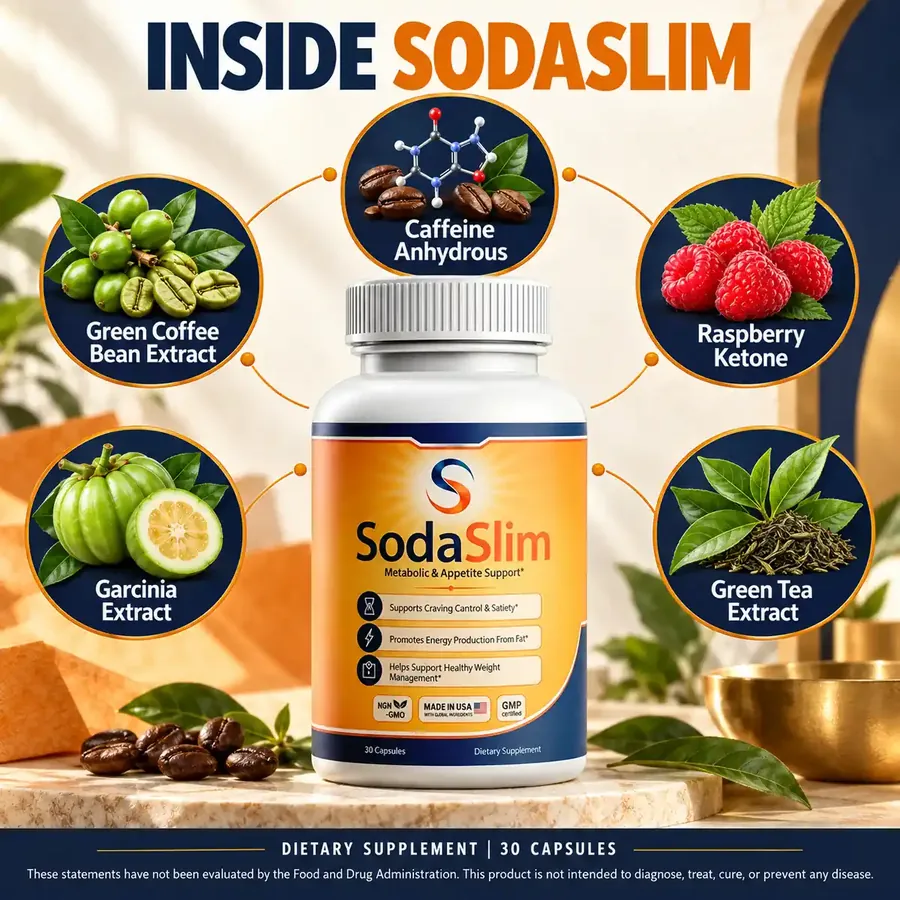
Garcinia extract
About 65 mg of HCA, where trials used 1,000 mg or more. The evidence, the liver reports and what the low dose means.
Read more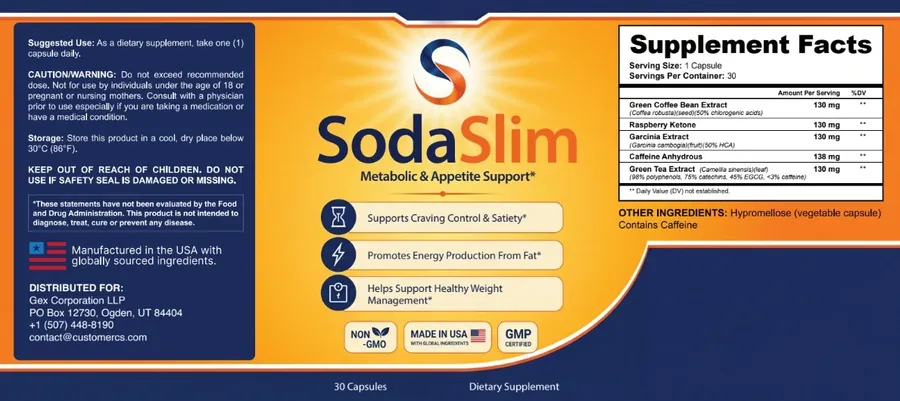
Supplement Facts
The Sodaslim label read line by line, plus the caffeine total and other details it does not print.
Read moreLicensed U.S. retail desk for Sodaslim
Ready to try Sodaslim?
Pick a pack. One capsule a day; every pack covers the whole 60-day window.
- Secure checkout
- 60-day money-back window
- Free U.S. shipping on 3+ bottles