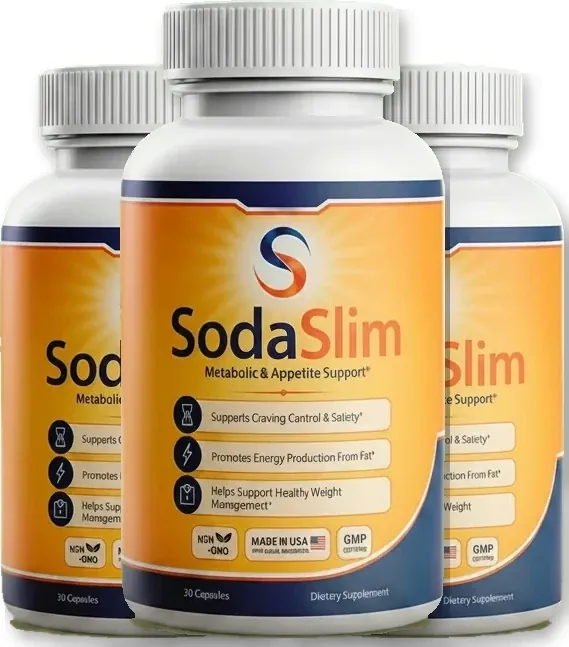
Ingredient profile
Green Coffee Bean Extract in Sodaslim: What the Research Can and Cannot Show
Sodaslim prints 130 mg of green coffee bean extract standardized to 50% chlorogenic acids, so about 65 mg of chlorogenic acids per capsule. Trials used 180 to 200 mg of extract a day. A review of the three included trials found about 2.5 kg more loss than placebo, but all three were poor quality (Onakpoya 2011: Green coffee meta-analysis), and one study behind the hype was called "hopelessly flawed" by the FTC (FTC: Green coffee study case).
Written by the Sodaslim editorial teamUpdated
The basics
What is green coffee bean extract?
Green coffee bean extract comes from coffee beans that have not been roasted. Roasting turns beans brown and breaks down much of a group of compounds called chlorogenic acids.
Unroasted beans keep more of those acids. Extract makers concentrate them and sell the powder by its chlorogenic acid percentage. Sodaslim's label names the source as Coffea robusta seed, standardized to 50% chlorogenic acids.
Green coffee also contains some caffeine. The label does not say how much, so it adds a small, unknown amount on top of the 138 mg of caffeine anhydrous.
| Label name | Green Coffee Bean Extract (Coffea robusta)(seed)(50% chlorogenic acids) |
|---|---|
| What it is | Coffea robusta seed · Plant extract |
| Position on the label | Printed with its own amount |
| Amount per serving (1 capsule) | 130 mg, printed (about 65 mg chlorogenic acids) |
| Amount used in research | 180-200 mg a day of extract in small, poor-quality trials |
| Strength of evidence | Poor-quality trials |
| Why it is used | Unroasted coffee beans, rich in chlorogenic acids |
| Main caution | Contains some caffeine, not stated on the label; headache reported. |
Raw vs roasted
How are green coffee beans different from the coffee you drink?
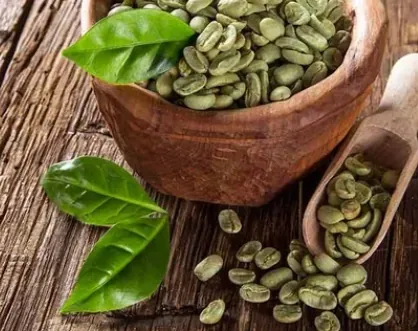
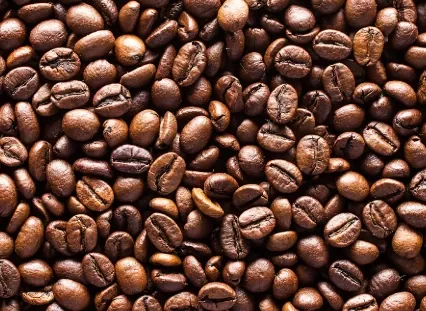
The plant is the same; the processing differs. Roasting develops flavor and color and lowers the chlorogenic acid content. A cup of brewed coffee is mostly about its caffeine, while green coffee extract is sold for its acids.
Dose check
How much green coffee extract is in a Sodaslim capsule?
130 mg of extract, which works out to about 65 mg of chlorogenic acids. That is below the 180 to 200 mg of extract a day used in trials, according to the NIH Office of Dietary Supplements (NIH ODS: Weight-loss supplements (HP)).
| Detail | Sodaslim label | Trials |
|---|---|---|
| Daily extract | 130 mg | 180 to 200 mg |
| Chlorogenic acids | About 65 mg (50%) | Varied by product |
| Length of use | 30 days per bottle | 4 to 12 weeks |
| Caffeine from the extract | Not published | Varied by product |
| Share of trial dose | About 65% to 72% | 100% |
A lower dose is not automatically useless, but no trial tested 130 mg. Results from 180 to 200 mg cannot simply be scaled down.
Evidence
Does green coffee bean extract help you lose weight?
The evidence is weak. A 2011 review by Onakpoya and colleagues found five eligible trials and pooled three. People on green coffee lost about 2.47 kg more than placebo, but all three trials were at high risk of bias (Onakpoya 2011: Green coffee meta-analysis).
The authors called the result "promising" and asked for more rigorous trials (Onakpoya 2011: Green coffee meta-analysis). The results also varied a lot from study to study, which weakens any single number.
The NIH consumer fact sheet says green coffee "might help you lose a small amount of weight" (NIH ODS: Weight-loss supplements (consumer)). That is a cautious statement, not an endorsement.
The trials tested green coffee alone, at higher doses. Sodaslim combines it with four other ingredients, and no trial of the full formula has been published.
A cautionary case
What did the FTC find about a green coffee weight-loss study?
That a widely promoted study was "hopelessly flawed". In 2014, green coffee supplier Applied Food Sciences paid 3.5 million dollars to settle FTC charges (FTC: Green coffee study case).
According to the FTC, the study's weights were altered, its length was changed and placebo groups were misstated. Ads claimed 17.7 pounds lost in 22 weeks "without diet or exercise", yet subjects had been told to diet and exercise (FTC: Green coffee study case). One trial was later retracted after the FTC stepped in, the NIH notes (NIH ODS: Weight-loss supplements (HP)).
Safety
Is green coffee bean extract safe?
It seems safe for most adults at up to 200 mg a day for 12 weeks, the NIH consumer fact sheet says (NIH ODS: Weight-loss supplements (consumer)). Sodaslim's 130 mg is under that amount.
- Reported side effects in studies include headache and urinary tract infections (NIH ODS: Weight-loss supplements (HP)).
- The extract contains caffeine, so it adds to your daily total.
- Long-term safety beyond about 12 weeks is less studied.
The caffeine side is the bigger concern in Sodaslim, because the capsule already holds 138 mg of caffeine anhydrous. The Sodaslim side effects guide covers the whole formula.
Claims
Does the Sodaslim label link green coffee to any claim?
No. The front of the bottle lists general claims, such as "Metabolic & Appetite Support*", with no ingredient named. The asterisk points to the statement that the FDA has not evaluated them (FDA: Structure/function claims).
Green coffee is the kind of ingredient that weight-loss ads have stretched before. The FTC case shows why a dramatic number tied to it deserves a second look. Our green coffee evidence post reads the studies in more detail, and the Sodaslim Supplement Facts guide covers the rest of the label.
Our view
Is the green coffee in Sodaslim worth paying for?
On its own, it is hard to justify. The dose is below the trials, and the trials themselves were weak.
Pros
- Amount and standardization printed
- Below the 200 mg level judged safe for 12 weeks
- Studied in people, unlike raspberry ketone
Cons
- 130 mg, below the 180-200 mg trials
- Only three small, poor-quality trials
- Adds caffeine the label does not count
FAQ
Green coffee bean extract in Sodaslim: common questions
How much green coffee bean extract is in Sodaslim?
Each capsule has 130 mg of green coffee bean extract from Coffea robusta seed, standardized to 50% chlorogenic acids. Half of that, about 65 mg, is chlorogenic acids. Trials used 180 to 200 mg of extract a day (NIH ODS: Weight-loss supplements (HP)).
Does green coffee bean extract really work for weight loss?
The evidence is weak. A review of three trials found about 2.47 kg more loss than placebo, but all three were poor quality (Onakpoya 2011: Green coffee meta-analysis). The NIH says it might help with a small amount of weight (NIH ODS: Weight-loss supplements (consumer)). No trial has tested Sodaslim itself.
Does the green coffee in Sodaslim add to its caffeine total?
Yes, some. Green coffee beans contain caffeine, but Sodaslim's label does not say how much its extract adds. It comes on top of the 138 mg of caffeine anhydrous, so the total per capsule is about 140 mg.
What are the side effects of green coffee bean extract?
Studies reported headache and urinary tract infections (NIH ODS: Weight-loss supplements (HP)). Because the extract contains caffeine, it can also add to jitters or poor sleep. The NIH says it seems safe for most adults at up to 200 mg a day for 12 weeks (NIH ODS: Weight-loss supplements (consumer)).
Why did the FTC fine a green coffee bean company?
In 2014, Applied Food Sciences paid 3.5 million dollars over a green coffee study the FTC called "hopelessly flawed" (FTC: Green coffee study case). Weights were altered and the study's length was changed. The FTC now requires two well-controlled human trials for such claims from that company.
Is green coffee bean extract the same as drinking coffee?
No. Green coffee extract comes from unroasted beans and is sold for its chlorogenic acids. Roasting lowers those acids. Brewed coffee mainly delivers caffeine, about 113 to 247 mg in 12 ounces (FDA: How much caffeine is too much).
Who wrote this
Written and reviewed by
Plain-language pages built from the bottle label, the order page and linked public health sources such as NIH, FDA and CDC.
Last updated . Read our editorial standards and how we check reviews. This website is run by a U.S. retail desk for Sodaslim, not by the manufacturer. We earn money when you buy through our order links.
Keep reading
More about Sodaslim
Green coffee bean evidence
The green coffee meta-analysis, why its trials were weak, the FTC case, and Sodaslim's 130 mg next to the 180-200 mg studied.
Read more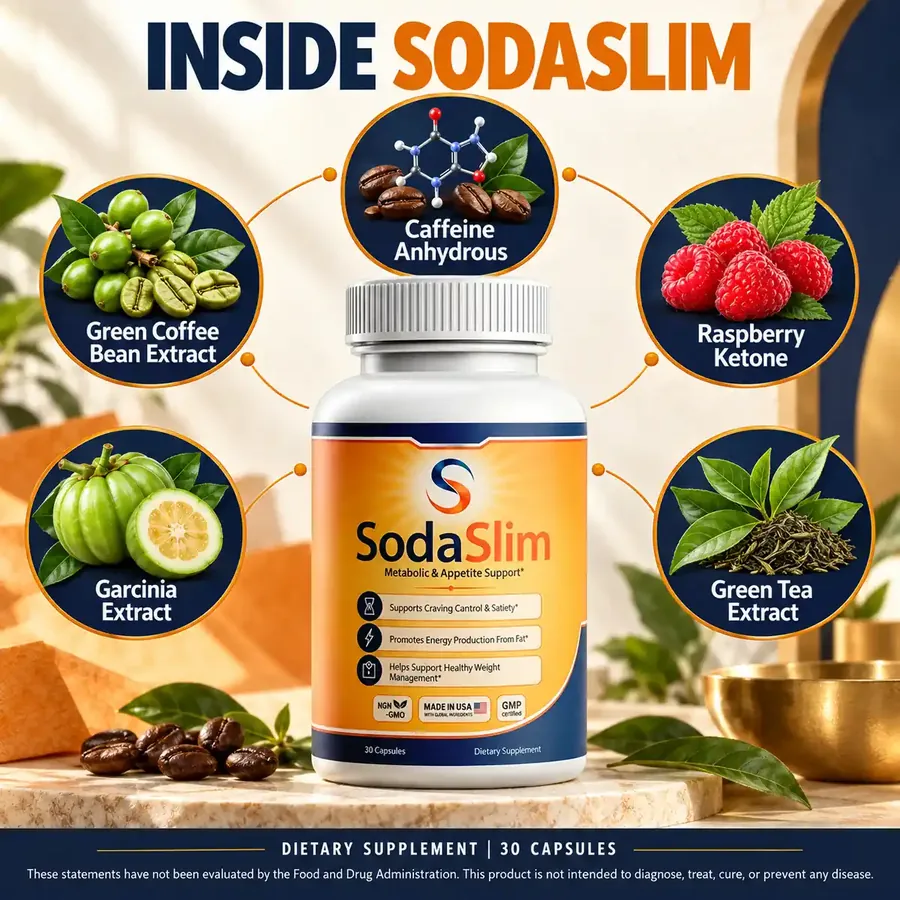
Caffeine anhydrous
138 mg of caffeine anhydrous, about one cup of coffee. What it does, how long it lasts and who should skip it.
Read more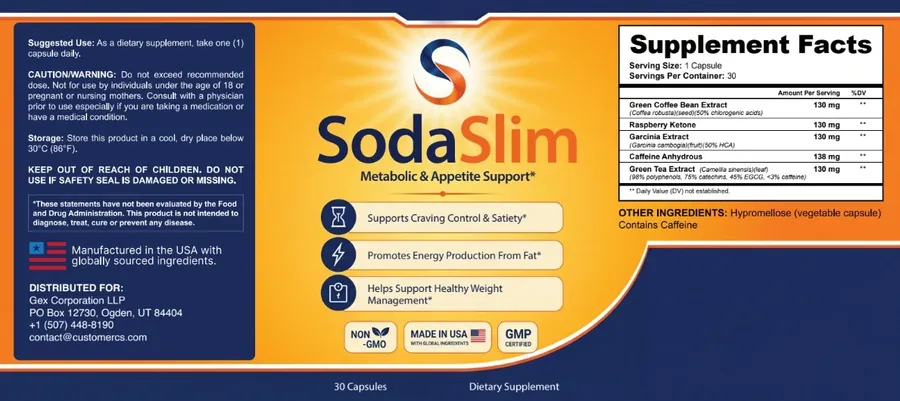
Supplement Facts
The Sodaslim label read line by line, plus the caffeine total and other details it does not print.
Read moreLicensed U.S. retail desk for Sodaslim
Ready to try Sodaslim?
Pick a pack. One capsule a day; every pack covers the whole 60-day window.
- Secure checkout
- 60-day money-back window
- Free U.S. shipping on 3+ bottles