Buyer smarts
Weight-Loss Ad Claims to Ignore, and How Sodaslim's Sales Page Measures Up
The FTC lists seven weight-loss claims that are almost always false, such as losing 2 lb or more a week for a month without diet or exercise. Fake news sites, borrowed media logos and glowing testimonials are other red flags. Sodaslim's label makes modest claims; its sales page goes further, so judge it by the label.
Written by the Sodaslim editorial teamUpdated · 8 min read

Why it matters
Why do weight-loss ads make claims that are not true?
Because the claims sell, and checks come after the ad runs. The FDA does not approve supplements or their labels before they go on sale (FDA 101: Dietary supplements). The Federal Trade Commission polices ads, usually once a problem is reported.
That leaves you as the first filter. The good news is that false claims follow patterns. Once you know them, they stand out.
The FTC's own advice is blunt: no product lets you eat all you want and still lose weight (FTC: Truth behind weight-loss ads).
The FTC list
Which weight-loss claims does the FTC say are almost always false?
The FTC names seven claims that are almost always false in its Gut Check guide for media (FTC: Gut check weight-loss claims). If an ad makes any of them, you can stop reading.
| # | The claim | Why it fails |
|---|---|---|
| 1 | Lose 2 lb or more a week for a month or longer without diet or exercise | Steady loss needs fewer calories or more movement |
| 2 | Lose a lot of weight no matter what you eat | Food still counts |
| 3 | Weight stays off after you stop the product | Results last only as long as habits do |
| 4 | Blocks the absorption of fat or calories enough for big losses | No supplement does this to a meaningful degree |
| 5 | Safely lose more than 3 lb a week for over 4 weeks | Too fast to be safe without medical care |
| 6 | Everyone who uses it loses a lot of weight | Bodies respond differently |
| 7 | Lose weight by wearing a product or rubbing it on your skin | Skin products do not change body weight |
The CDC's guide is far more modest: about 1 to 2 lb a week (CDC: Steps for losing weight). Any ad that beats it by a wide margin is asking you to trust it over the science.
Fake news sites
How do you spot a fake news site selling diet pills?
Look for a story page with a single product, a single "reporter" and a buy button at the end. The FTC warns that scammers build fake news sites to look like real journalism (FTC: Truth behind weight-loss ads).
- The site name sounds like a real outlet but the web address is different.
- Every link points to one product's order page.
- The "reporter" tried the product and lost a striking amount of weight.
- Before-and-after photos look too good to be true, a warning sign the NIDDK also names (NIDDK: Choosing a weight-loss program).
Real news stories rarely end with a discount code. If one does, treat it as an ad.
Borrowed logos
Do media logos on a supplement site mean it was featured?
Not by themselves. The FTC says weight-loss scammers use stolen logos of well-known outlets to borrow trust (FTC: Truth behind weight-loss ads). A logo strip with no link to a real article or study proves nothing.
The Sodaslim sales page shows a row of publication logos. The page names no study or article, and its own footer says the company is not affiliated with those organizations. We read that strip as decoration, not evidence.
How to check a logo
Search the outlet's own website for the product name. If you find nothing, the logo is not a citation.
Testimonials
Can you trust before-and-after photos and testimonials?
Treat them with care. The FDA lists personal testimonials among its top tip-offs to health fraud, because they are easy to invent (FDA: 6 tip-offs to rip-offs). The FTC adds that scammers use stock or altered before-and-after photos (FTC: Truth behind weight-loss ads).
Real testimonials can mislead too. The FTC says ads showing results beyond what most users get are likely deceptive, and "results not typical" in small print does not fix that (FTC: Health products compliance).
Since 2024, a federal rule bans fake reviews, reviews from people who never used a product and company-controlled "independent" review sites (FTC: Fake reviews rule (2024)). Spotting them is still hard. The FTC suggests reading several sources and watching for sudden bursts of praise (FTC: Evaluating online reviews). How we handle Sodaslim reviews is on the Sodaslim reviews page.
More red flags
What other weight-loss ad tricks should you ignore?
One product fixes everything
Weight, skin, sleep, gut and energy all at once. The FDA names this as a classic fraud pattern (FDA: 6 tip-offs to rip-offs).
"Lose 30 pounds in 30 days"
The NIDDK uses this exact line as a warning sign when choosing a program (NIDDK: Choosing a weight-loss program).
"All natural" as a safety promise
Natural does not mean safe, says the FDA (FDA 101: Dietary supplements). Plant extracts can still harm the liver or clash with medicines.
Clocks and "today only" prices
A timer adds pressure, not information. A fair price is still fair tomorrow.
The FDA has also found hundreds of weight-loss products sold as supplements with hidden drugs, such as sibutramine, a withdrawn medicine linked to heart attack and stroke (FDA: 6 tip-offs to rip-offs).
Sodaslim's own claims
How does the Sodaslim sales page compare with its own label?
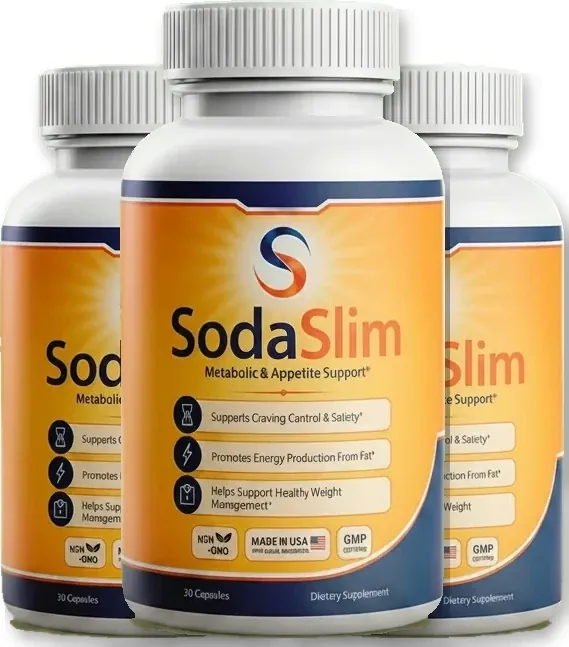
The label is careful; the sales page is not. Every front-label claim carries an asterisk pointing to the FDA disclaimer, and none mentions a specific amount of weight.
| Topic | What the label says | What the sales page does |
|---|---|---|
| Weight | "Helps Support Healthy Weight Management*" | Makes direct weight and body-measurement promises |
| Fat | "Promotes Energy Production From Fat*" | Goes further on fat than the label allows |
| Appetite | "Supports Craving Control & Satiety*" | Uses much stronger hunger language |
| Extras | No such claims | Adds claims about carbs, cleansing, skin and muscle |
The sales page goes further than its own label and disclaimer allow; we do not repeat its weight-loss and fat-burning claims (FTC: Health products compliance) (FTC: Gut check weight-loss claims). The FTC says a disclaimer does not rescue a deceptive ad (FTC: Health products compliance). What the five ingredients can and cannot do is on the how Sodaslim works page.
Your checklist
How should you read any weight-loss supplement ad?
Read the label first and the ad last. The label is the document a company is held to.
Find the Supplement Facts
Look for each ingredient's amount. Sodaslim prints all five, led by 138 mg of caffeine.
Compare doses with research
Check whether the amounts match what trials used. The guide to choosing a weight-loss supplement shows how.
Run the Gut Check
Any of the seven FTC claims means the ad is not telling the truth.
Report what looks wrong
File a report at ReportFraud.ftc.gov (FTC: Truth behind weight-loss ads).
FAQ
Weight-loss ad claims: questions
What is on the FTC Gut Check list for weight-loss ads?
The FTC lists seven claims that are almost always false, including losing 2 lb a week without diet or exercise, losing weight no matter what you eat, and permanent loss after you stop (FTC: Gut check weight-loss claims). Products worn or rubbed on the skin are also on the list.
Are the news stories about diet pills real?
Many are not. The FTC warns that weight-loss sellers build fake news sites that copy real outlets, with one product and one buy link (FTC: Truth behind weight-loss ads). Search the outlet's own website before trusting the story.
Does Sodaslim's sales page match its label?
Not fully. The label makes careful, asterisked claims about metabolic and appetite support. The sales page makes much stronger promises that the label and its disclaimer do not support, so we go by the label.
Why does the Sodaslim website show news logos?
The sales page shows a strip of publication logos, but it names no article or study. Its own footer says the company is not affiliated with those organizations, so the logos are not evidence of coverage.
Is it illegal to post fake supplement reviews?
Yes. A 2024 FTC rule bans fake reviews, reviews from people with no real experience and company-run review sites posing as independent (FTC: Fake reviews rule (2024)). Knowing violators can face civil penalties.
Where can I report a misleading weight-loss ad?
Report it to the FTC at ReportFraud.ftc.gov (FTC: Truth behind weight-loss ads). If a product made you ill, also tell your doctor and file a report with the FDA's Safety Reporting Portal.
Who wrote this
Written and reviewed by
Plain-language pages built from the bottle label, the order page and linked public health sources such as NIH, FDA and CDC.
Last updated . Read our editorial standards and how we check reviews. This website is run by a U.S. retail desk for Sodaslim, not by the manufacturer. We earn money when you buy through our order links.
Keep reading
More about Sodaslim
Choosing a weight-loss supplement
Five checks for any weight-loss supplement, from hidden drugs to refund terms, with Sodaslim scored by the same rules.
Read more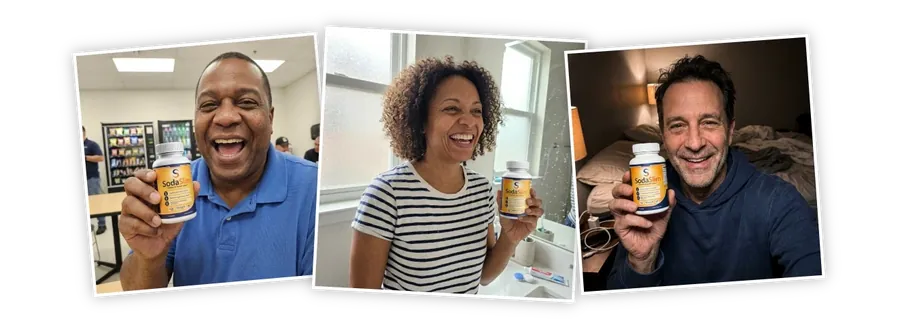
Reviews
Why Sodaslim has no star score here, how a review is matched to an order, and why sales page stories are not reviews.
Read more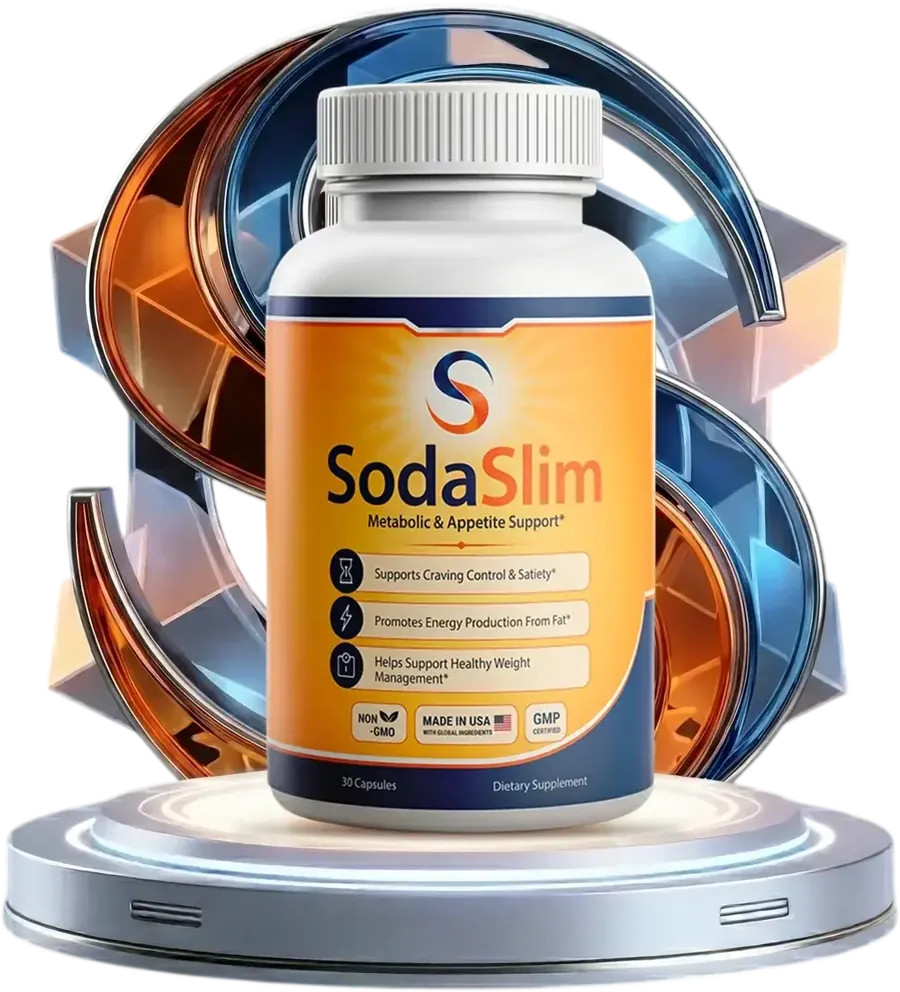
How it works
Caffeine does the measurable work; four extracts sit below trial doses. How Sodaslim is meant to work, dose by dose.
Read moreLicensed U.S. retail desk for Sodaslim
Ready to try Sodaslim?
Pick a pack. One capsule a day; every pack covers the whole 60-day window.
- Secure checkout
- 60-day money-back window
- Free U.S. shipping on 3+ bottles